
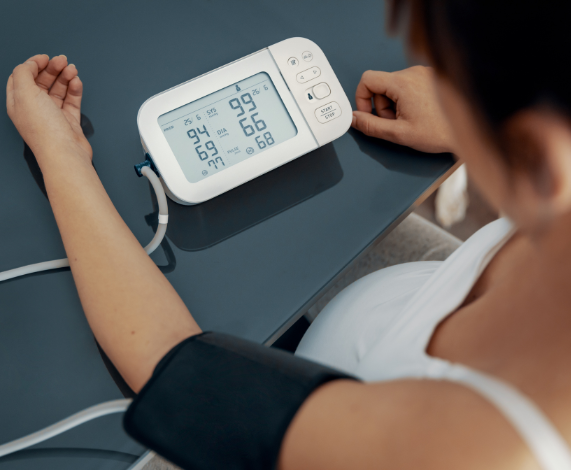
Preeclampsia is a pregnancy complication that can usually arise after the 20th week of gestation, and is characterized by high blood pressure and the presence of protein in the urine (proteinuria).
This pregnancy disorder afecta aproximadamente a entre el 2% y el 8% de las mujeres gestantesen todo el mundo. Tiene su origen en problemas de desarrollo de los vasos sanguíneos de la placenta, que acaban por reducir el flujo sanguíneo. Esta condición es seria y requiere atención médica inmediata para prevenir complicaciones graves tanto para la madre como para el bebé.
It manifests itself through a significant increase in blood pressure and can cause damage to other organs, mainly the kidneys and liver. If not treated properly, it can evolve into eclampsia, a more serious condition that can be fatal.
Symptoms
They can vary and sometimes go unnoticed, especially in their early stages. Some of the most common include:
• High blood pressure: Blood pressure readings higher than 140/90 mm Hg.
• Proteinuria: Presence of proteins in the urine, detected by urine analysis.
• Swelling: Especially in the hands, feet and face (although this can also be normal during pregnancy).
• Severe headache: That does not go away with medication.
• Vision problems: Such as blurred vision, flashes of light, or extreme sensitivity.
• Pain in the upper abdomen: Usually below the ribs, on the right side.
• Nausea or vomiting: Persistent and not related to morning sickness during pregnancy.
• Decreased urine output: Indicative of kidney damage.
• Difficulty breathing: Due to fluid buildup in the lungs.
Risk factors
Although it can affect any pregnant woman, certain conditions increase the likelihood of developing it:
• First pregnancy: It is more common in women who are pregnant for the first time.
• Previous history: Women who have had preeclampsia in previous pregnancies.
• Underlying health conditions: Such as chronic hypertension, diabetes, kidney disease, or autoimmune disorders.
• Age: Women under 20 years of age or over 35 years of age.
• Multiple pregnancy: Women pregnant with twins, triplets, etc., are at higher risk.
• Genetic factors: Family history of preeclampsia.
Detection
Regular monitoring is essential during prenatal visits and consultations. Tests include:
• Blood pressure measurement: At each prenatal visit.
• Urine analysis: To detect the presence of proteins.
• Blood tests: To evaluate kidney and liver function.
• Evaluation of symptoms reported by the patient.
Treatment
It will always depend on the severity of the condition and the length of gestation. Options include:
• Close monitoring: Includes frequent blood pressure checks and laboratory tests.
• Rest: In mild cases, rest at home or in the hospital may be recommended.
• Medication: To control blood pressure and prevent seizures (such as magnesium sulfate).
• Fetal lung maturation: With corticosteroids if the pregnancy is less than 34 weeks, to accelerate fetal lung development.
• Childbirth: In severe cases, it may be necessary to induce labor, regardless of the stage of pregnancy, to protect the health of the mother and baby.
Preeclampsia is a serious condition that requires proper care and management. Regular prenatal visits and frequent, direct communication are essential for early detection and treatment. Although it cannot be prevented, understanding the symptoms and risk factors can help both the patient and medical professionals manage it and ensure a healthy pregnancy.