
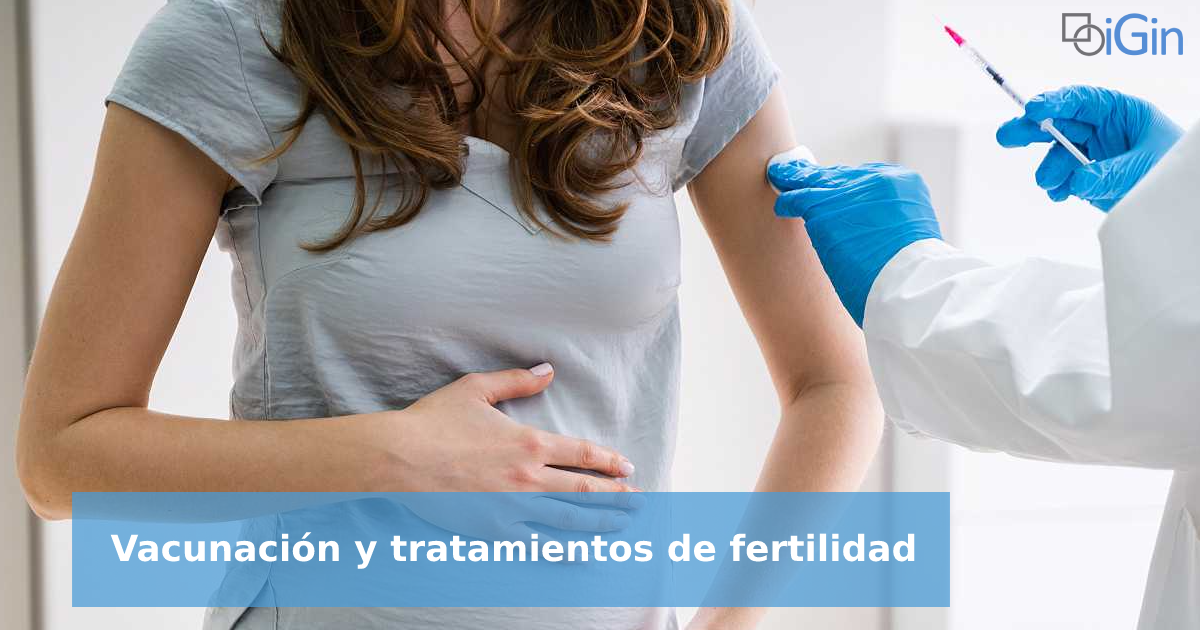
Our country is fully immersed in the vaccination process against Covid-19. With the vaccines, we are beginning to see the end of a pandemic that has profoundly disrupted our lives and plans, including the desire of many women and couples to have children.
For many of these people, Covid meant postponing the reproductive treatments they were going to undergo in 2020. And now that these treatments have been resumed, the question arises as to whether there is any inconvenience, any incompatibility, between vaccines and assisted reproduction. Let’s shed some light on the matter.
Covid vaccines
Two of the vaccines being administered in Spain do not contain live viruses, but are based on messenger RNA: they teach the body to produce a protein that triggers the immune response. They are from Pfizer and Moderna.
The third, from AstraZeneca, uses another transformed and adapted virus as a base to transport a portion of the DNA of the Covid virus and let our cells produce the messenger RNA and subsequently trigger the immune system response in our body.
In all cases two doses are needed to complete the process.
Vaccination and treatments
As this is a new coronavirus, there is a lack of information on the possible effect of vaccination in all possible cases, including reproductive treatments.
As a precautionary measure, there is consensus among the different medical societies (ESHRE, SEF) e incluso la Organización Mundial de la Saluden que lo recomendable es establecer un periodo de prudencia desde la segunda dosis de la vacuna hasta la búsqueda del embarazo.
At iGin, in agreement with the rest of the scientific community, we recommend waiting two weeks after the administration of the second dose to start any reproduction treatment.
What happens if I get vaccinated while I am undergoing a fertility screening?
There is no problem in carrying out diagnostic tests prior to carrying out fertility treatment and vaccinating the population.
What if I’m already in the middle of my cycle?
If vaccination by health authorities coincides with the patient undergoing fertility treatment, it will depend on the type of treatment being carried out and the stage of the pregnancy the patient is in:
- If you have started ovarian stimulation (IVF/ICSI, oocyte donation, ROPA method):
It is recommended to finish the stimulation treatment and postpone vaccination until stimulation and oocyte retrieval are complete. If retrieval is finished and embryos are manufactured, fresh embryo transfer is not recommended, but vaccination should be carried out and the embryo transfer procedure should be postponed until vaccination is complete.
- If artificial insemination has been started:
It is recommended to suspend stimulation and postpone the procedure until vaccination is completed.
- If embryo transfer/recipient ROPA has been initiated:
It is recommended to suspend endometrial preparation and postpone the embryo transfer procedure until vaccination is complete.
- If the recipient of donor oocytes has started:
It is recommended to stop endometrial preparation and postpone the embryo transfer procedure until vaccination is complete. Donation can be completed and embryos can be vitrified.
- In case of having to leave a semen sample (men):
The process will be completed and vaccination postponed until the semen sample is collected.
In any case, all cases must be assessed individually with the medical professional, paying attention to the patient’s context. There are cases of people who do not want to be vaccinated, or who consider that the waiting times between doses would excessively prolong the achievement of pregnancy, or that the delay could worsen the patient’s reproductive prognosis.
Vaccines and pregnancy
Until now, the general recommendation was to postpone vaccination until the end of pregnancy. This is what both the Ministry of Health and scientific societies have reminded us of. Although there are no indications of safety problems related to vaccination against coronavirus in pregnant women, there is still no experience with this population group.
However, the upcoming arrival of the Janssen vaccine promises to change this approach, as it will be the first vaccine approved, either by the WHO or by other national regulatory entities, for pregnant women.