
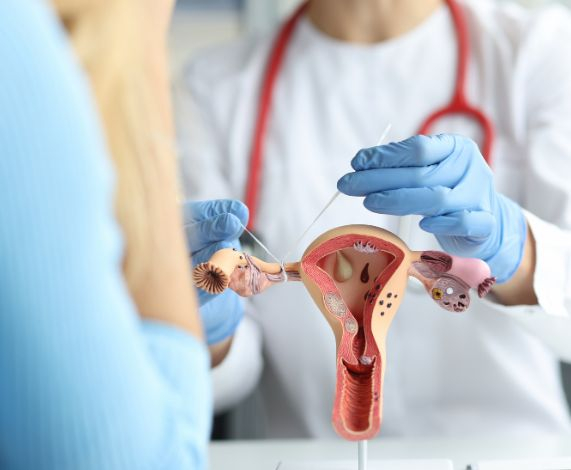
It is one of the main obstacles to achieving pregnancy, as it prevents the meeting between the egg and sperm.
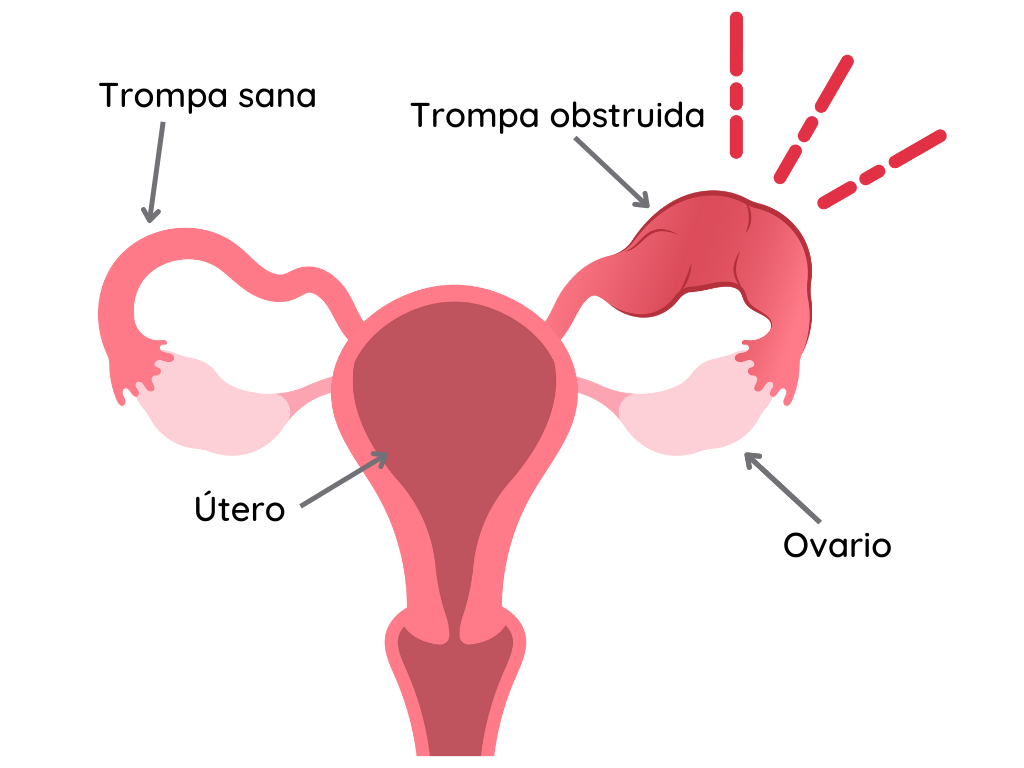
The fallopian tubes are two thin, flexible tubes about 12 centimetres long that connect the ovaries to the uterus. Normally, fertilisation takes place in these tubes, as this is where the sperm meets the egg. Once the embryo has formed, it will be transported to the uterus for implantation and development.
It is an organ that must be fully functional in order to achieve pregnancy naturally. It is therefore not surprising that a large part of infertility consultations are due to its obstruction; it is estimated that one in three women who go to a reproduction centre suffer from it.
Causes
• Salpingitis
The most common cause is inflammation and obstruction due to an infection, often caused by sexually transmitted diseases such as chlamydia or gonorrhea.
• Hydrosalpinx
Sometimes the tubes become blocked by adhesions (such as endometriosis or fibroids). They can also be caused by injuries caused by pelvic surgery. Blockages also cause fluid to accumulate within the tube circuit. They can be unilateral (affecting one of the two tubes) or bilateral (when both are affected).
• Congenital obstruction
The cause may be a morphological abnormality at birth. This is often called congenital blockage.
• Injuries
Injuries, such as those caused by a miscarriage or ectopic pregnancy, can also damage the tubes and eventually block them.
Diagnosis and solution
There is a test to find out if a woman is suffering from obstruction: the histerosalpingografía. Mediante un catéter se hace pasar un líquido de contraste por el útero y las trompas de Falopio. Luego se radiografía la zona, pudiendo apreciarse su estado. Es un procedimiento sencillo que no precisa anestesia.
If an obstruction is found, the doctor will suggest a solution that will depend on the cause and its extent, and may be surgical. In some cases, In Vitro Fertilization will be necessary to achieve pregnancy.
If you suspect that you may have a blockage, we recommend that you make an appointment with a specialist. At IGIN we are experts and our consultations are free. You can make an appointment using this form.